Nomad Raceways

James Cunningham

Interactive Attraction Staffing Model for Trade Show Booths: Roles, Flow, and Day-Of Coverage

Interactive Attraction Staffing Model for Trade Show Booths: Roles, Flow, and Day-Of Coverage

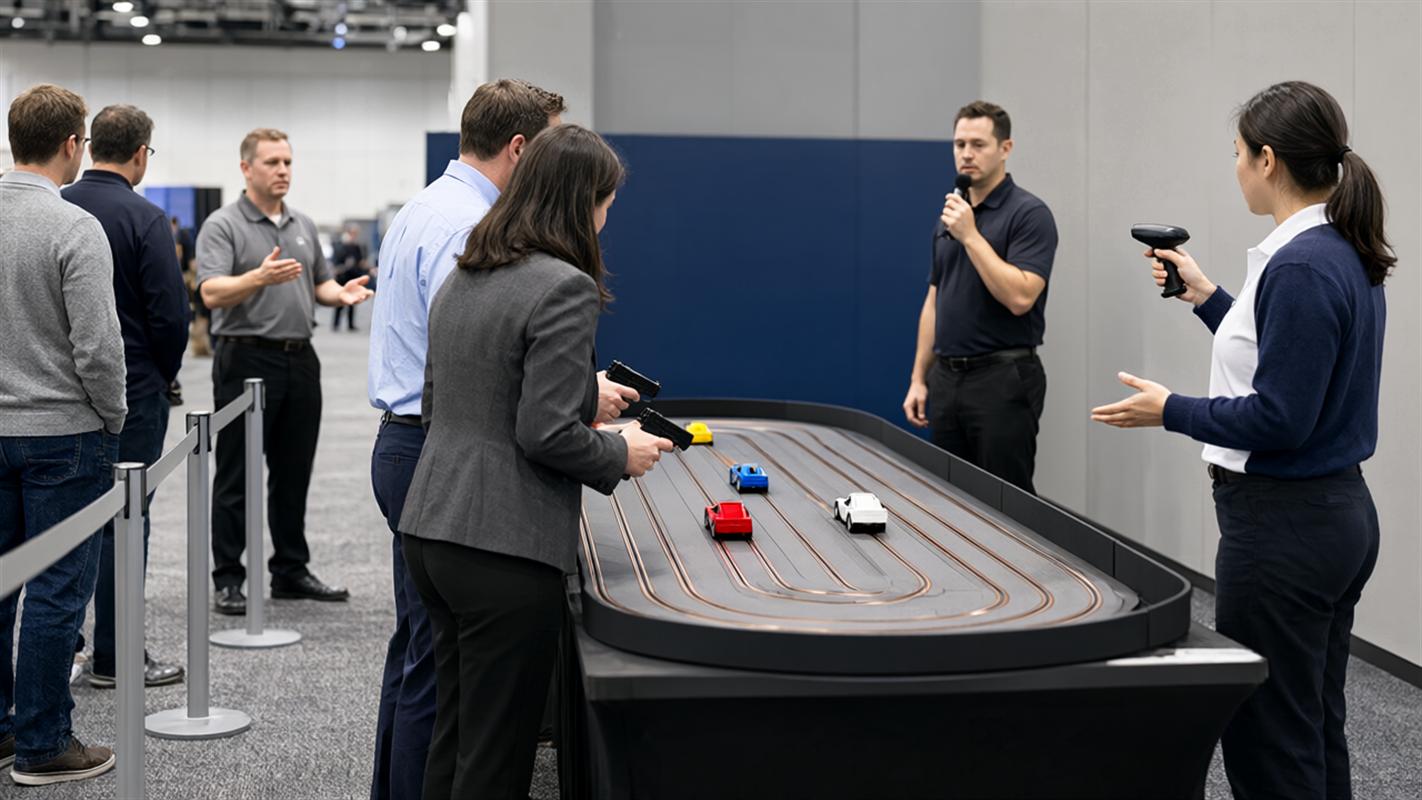
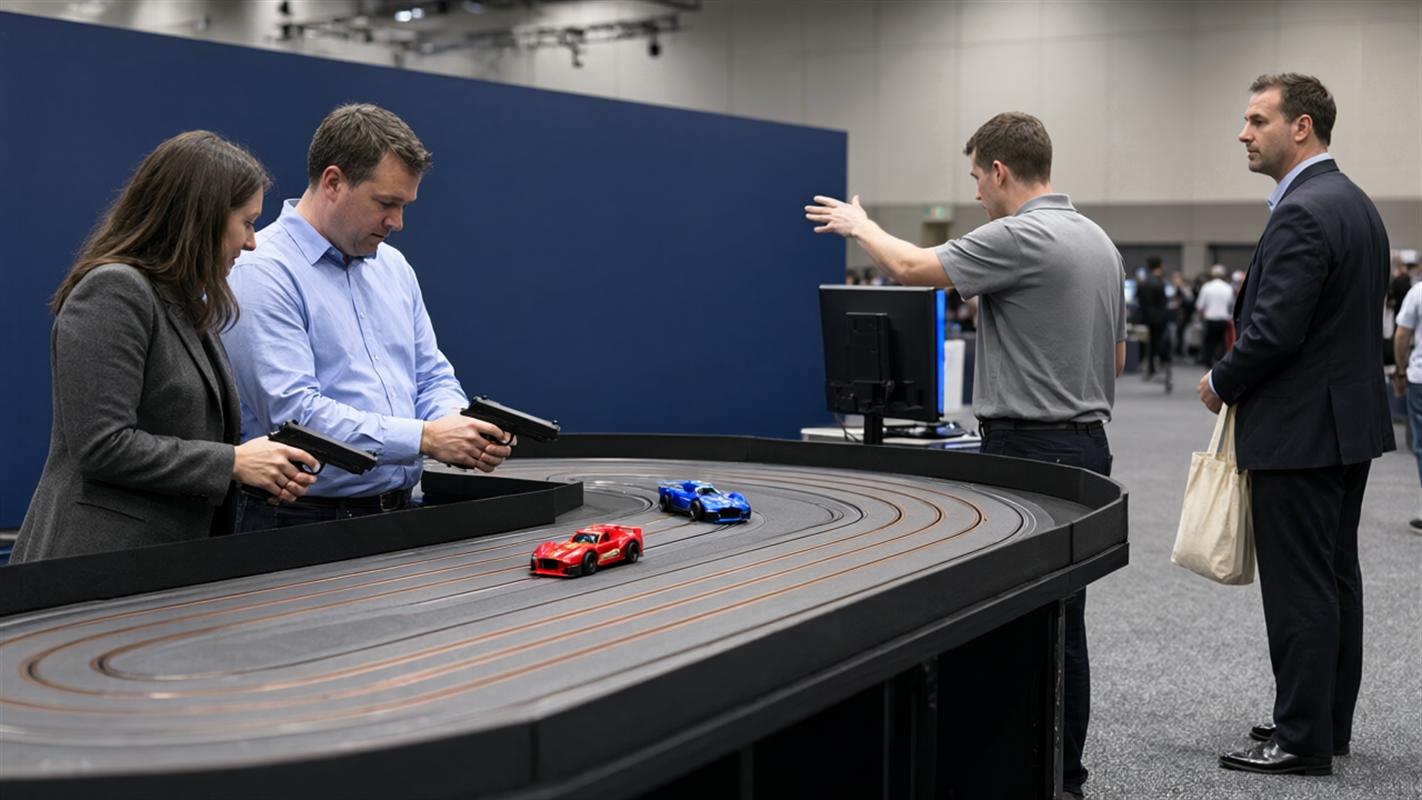
Trade show booths with interactive slot car racing need clear roles to keep the experience running smoothly. Four positions—race director, line host, booth host, and lead capture—work together to manage traffic, engagement, and follow-ups. Assigning these roles upfront ensures the attraction stays lively without confusion.

At peak times, one person can’t handle all tasks. The race director focuses on the track, while the line host manages queue flow to avoid blocking aisles. The booth host connects the race to your brand’s message, and lead capture records details during the moment of interaction. Separating these duties keeps everyone accountable.

Handoffs between shifts need quick updates: who’s racing, who’s waiting, and which conversations are worth following. Stay staffed until the show ends to capture all leads and maintain engagement. Custom track designs and branded cars fit any space or power setup, indoors or outdoors.

Ready to plan your next event? Let’s outline the roles and layout that work best for your booth. Get a quote today.
Interactive Attraction Staffing Model for Trade Show Booths: Roles, Flow, and Day-Of Coverage Read More »

How to Combine Product Demos with Live Slot Car Racing at Trade Shows

How to Combine Product Demos with Live Slot Car Racing at Trade Shows

Trade show booths often fail by putting demos first. But when you start with an attraction like live slot car racing, visitors stop on purpose — not by accident. This creates a natural flow: they engage with the race, then move into the demo with their attention already captured.

Interactive racing shifts the visitor’s role from observer to participant. A quick heat keeps them in your space, giving your team a chance to connect without cold approaches. Pair this with branded cars and product-focused commentary, and the demo becomes a conversation starter, not a solo performance.

Plan your layout to fit the space, power needs, and sightlines. Heats should be short enough to match the demo’s length, and custom tracks can adapt to any venue. Let’s walk through your floor plan and build a setup that works for your event — no rush, just practical results.

Get a quote to start designing your booth traffic generator.

How to Combine Product Demos with Live Slot Car Racing at Trade Shows Read More »

Trade Show Attraction Case Study: How Interactive Racing Supports Booth Traffic

Trade Show Attraction Case Study: How Interactive Racing Supports Booth Traffic

Exhibitors do not book an attraction from a description alone. They want to know who stopped, how long visitors stayed, and whether the booth team came away with scans. Our case study looks at slot car tracks that ran on real show floors, from association conferences to security shows.

A short heat gives attendees a reason to stop. One to two minutes is enough to watch, then race. Multiple lanes keep groups moving, and our Race Directors handle setup, operation, and breakdown so the booth team can focus on conversation.

The outcomes were practical. One client collected a record number of scans, one earned press coverage, and one put product messages on the cars. We also design tracks to fit the actual space, power source, and move-in window.

Read the full case study to see how interactive racing supports booth traffic and follow-up.

Trade Show Attraction Case Study: How Interactive Racing Supports Booth Traffic Read More »

Trade Show Interactive Attraction Setup Checklist: Space, Power, Flow, Branding, and Staffing

Trade Show Interactive Attraction Setup Checklist: Space, Power, Flow, Branding, and Staffing

A trade show attraction usually fails when the booth plan only covers the equipment, not the live floor. We plan slot car racing as one system: space, power, traffic flow, branding, and staffing. That helps the booth stay usable once attendees start watching, waiting, and moving around the track.

Check the real footprint first. The attraction needs room for participants, spectators, staff access, and conversations. Confirm power early for the track, monitors, lights, and sound, then test everything before the hall opens.

Separate roles so one person is not running the track, the line, and lead capture at the same time. Branding should be visible from the aisle and during the race, not just on the car someone is holding.

Read the full setup checklist before your next show.

Trade Show Interactive Attraction Setup Checklist: Space, Power, Flow, Branding, and Staffing Read More »

Custom Slot Car Track Design: When a Standard Rental Is Not Enough

Custom Slot Car Track Design: When a Standard Rental Is Not Enough

A standard slot car rental works well when the goal is simple entertainment. It stops being enough when the track also needs to fit a booth, carry visible branding, support spectator flow, or help pull people into the event.

We look at the usable footprint, power needs, setup timing, and how people move around the activation. A custom layout can keep sightlines open, improve scoring visibility, and make the experience easy to watch from the aisle or around the booth. Branded cars and displays also keep the track connected to the event while people are playing.

Use standard when the event can adapt to the setup. Use custom when the activation has to support the event. Read the post for a practical way to decide what your next racing activation needs.

Custom Slot Car Track Design: When a Standard Rental Is Not Enough Read More »

Trade Show Entertainment Footprint Guide: Small, Large, and Outdoor Booth Setups

Trade Show Entertainment Footprint Guide: Small, Large, and Outdoor Booth Setups

Planning booth entertainment usually starts with the attraction size. The clearer starting point is the full operating footprint. That includes the track, the racers, the line, the viewers, the staff space, and safe access to the front of the booth.

Small booths work best when the setup is easy to understand, quick to join, and simple to reset. A compact track can create visible competition without taking up the whole stand. Still, you need room for spectators to move and room for your team to talk after the race.

Larger booths allow destination-style layouts, but they still need intentional placement. Place the attraction where it supports traffic loops and conversation zones, not in a corner where the rest of the booth feels underused.

If your show is indoors, outdoors, or set up in a tighter footprint, we help plan track size, power access, and guest flow so the activation supports your booth goal. Read the full footprint planning guide.

Trade Show Entertainment Footprint Guide: Small, Large, and Outdoor Booth Setups Read More »

Scroll to Top